Learning Outcomes
After completing this lesson, students will be able to:
i. Compare and contrast the different photosynthetic pathways, including C3, C4, and CAM photosynthesis.
ii. Analyze the adaptations of different plant species to different environmental conditions, such as temperature, light intensity, and water availability.
iii. Evaluate the evolutionary significance of different photosynthetic pathways in relation to the changing environments of plants over time.
Introduction
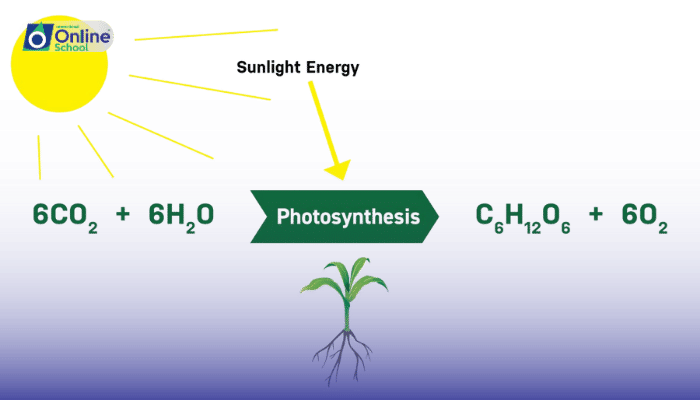
Photosynthesis is the fundamental process by which plants, algae, and some bacteria convert light energy into chemical energy in the form of glucose, a simple sugar. This process is essential for life on Earth, as it provides the food and oxygen that sustain all living organisms.
i. Diversity of Photosynthetic Pathways: While the basic principles of photosynthesis are the same for all photosynthetic organisms, there are different pathways that plants use to carry out this process. The three main photosynthetic pathways are C3, C4, and CAM photosynthesis.
C3 Photosynthesis: The most common photosynthetic pathway is C3 photosynthesis, named after the first three carbon atoms that are fixed in the Calvin cycle, the central carbon-fixing phase of photosynthesis. C3 plants are typically found in temperate regions with moderate temperatures and adequate rainfall.
Adaptations of C3 Plants: C3 plants have several adaptations that help them optimize photosynthesis under these conditions. They have large, thin leaves with a high surface area to maximize light capture. They also have a well-developed network of stomata, which are tiny pores that allow carbon dioxide (CO2) to enter the leaves and oxygen (O2) to exit.
Limitations of C3 Photosynthesis: Despite their adaptations, C3 plants are relatively inefficient photosynthesizers. This is because they are susceptible to photorespiration, a process that occurs in high-light conditions when CO2 is fixed by an enzyme called rubisco, but then immediately released back into the atmosphere.
ii. C4 Photosynthesis: C4 plants have evolved a mechanism to overcome the limitations of photorespiration. In C4 plants, the first step of carbon fixation occurs in specialized bundle-sheath cells, which are tightly packed around the vascular tissue of the leaves. These bundle-sheath cells contain a high concentration of CO2, which helps to suppress photorespiration.
Adaptations of C4 Plants: C4 plants have several adaptations that support their efficient photosynthesis. They have a distinctive kranz anatomy, with bundle-sheath cells surrounding the vascular tissue. They also have a high concentration of enzymes involved in carbon fixation, allowing them to fix CO2 quickly and efficiently.
C4 Plants in Hot, Dry Environments: C4 plants are typically found in hot, dry environments, such as tropical grasslands and deserts. Their adaptations allow them to thrive in these conditions, where water is scarce and temperatures are high.
iii. CAM Photosynthesis: In contrast to C3 and C4 plants, which fix CO2 during the day, CAM plants fix CO2 at night and store it in organic acids. This CO2 is then released during the day and used for photosynthesis.
Adaptations of CAM Plants: CAM plants have several adaptations that allow them to survive in arid environments. They have thick, succulent leaves that store water and reduce water loss through transpiration. They also have stomata that open at night to allow CO2 to enter the leaves.
CAM Plants in Arid Environments: CAM plants are typically found in arid environments, such as deserts and succulent forests. Their adaptations allow them to conserve water and photosynthesize efficiently, even in conditions of extreme drought.
Evolutionary Significance of Photosynthetic Pathways
The evolution of different photosynthetic pathways is thought to have been driven by changes in environmental conditions over time. C3 photosynthesis is considered to be the ancestral pathway, and C4 and CAM photosynthesis are thought to have evolved as adaptations to specific environmental challenges.
The comparative study of photosynthetic processes highlights the diversity and adaptability of plants. By understanding the different photosynthetic pathways and their adaptations, we can better appreciate the remarkable ability of plants to harness the energy of the sun to sustain life on Earth.
